OFF THE RECORD (prologue)
ORIGINAL PILOT: one-hour drama, newsroom procedural

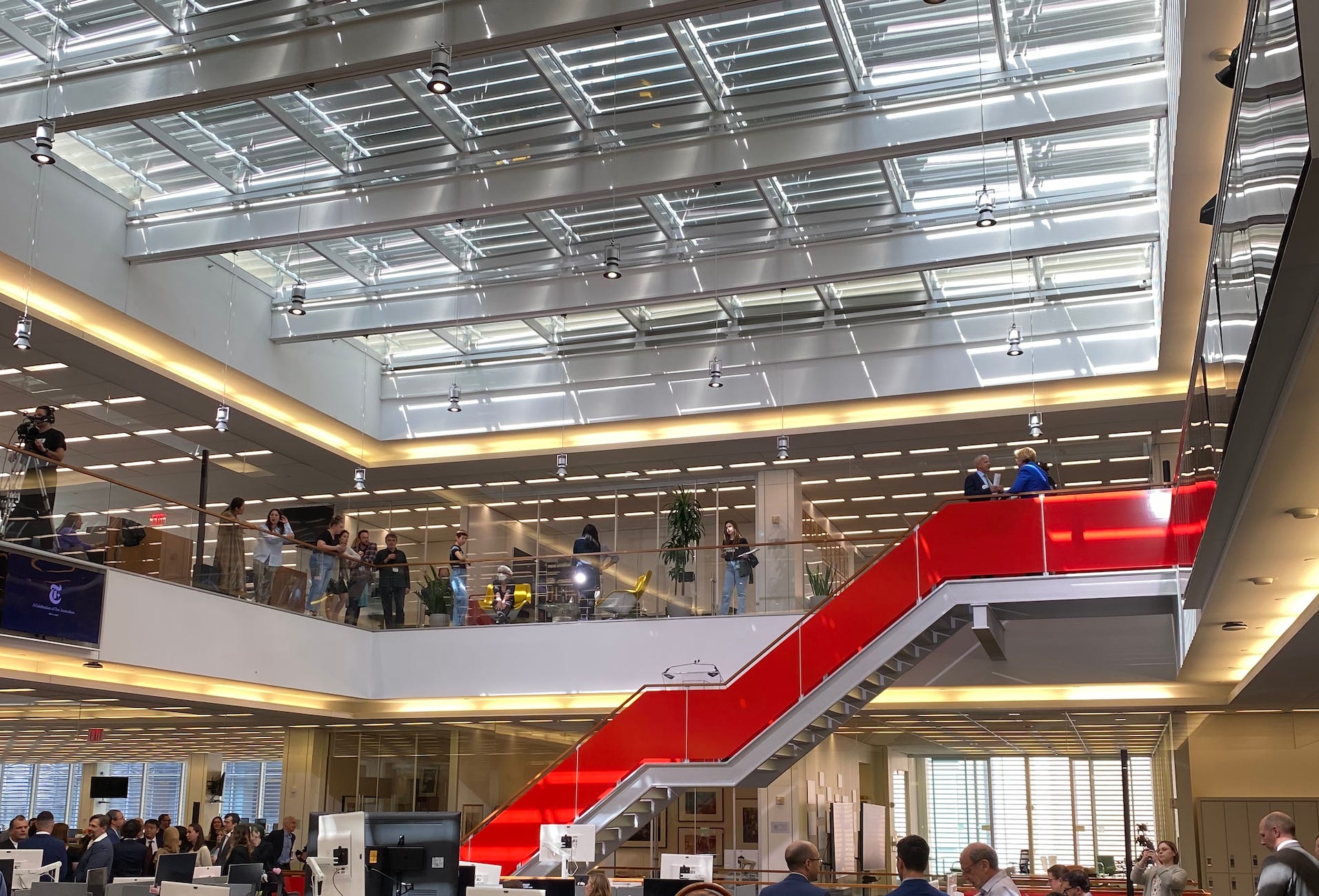
No one trusts the news
I spent the last several years at The New York Times tackling a tectonic problem: the cratering faith in news. It recently hit a record low.
After Donald Trump won the presidency in 2016, the verdict was immediate: we blew it. Twitter, YouTube, Facebook, Reddit, the whole feed, lit up. The charges were relentless. Both-side-ism. Platforming. An allergy to calling a lie, a lie.
But then a more destructive thought entered the conversation. We were in on it. Trump, after all, was just an avatar of the White Ruling Class, and we were part of the machinery. He ran three times and the only election he lost was to a fellow son of the commonwealth. Power preserves power.
I’ve been a journalist for more than 20 years. We’re not that clever. There is no “the media.” No monthly meetings. No Star Chamber under Eighth Avenue. We’re just a supper club of hungry reporters trying to beat one another on a story. Our shared language is short: This matters and I got it. That’s all we care about. That’s the job.
I know earnest mottos won’t quell the riot. You can feel it, the need for a hidden hand. Conspiracy is our new religion. It’s just easier, more legible, to believe newspapers march to the beat of an invisible drum. Once, they did.
But the machine changed gears. Bob Woodward was a registered Republican when he investigated Watergate. The New York Times, derided as a left-wing rag, broke the Pentagon Papers, revealing how four U.S. presidents deceived the public on Vietnam. Three of them — Truman, Kennedy, Johnson — Democrats.
We’re not on anyone’s (or party’s) side. Why would we cut ourselves off from half the scoops out there?
Eating your own
For more than a decade, I was a media reporter, which meant reporting on the reporters, covering the business, and chasing the news on newsrooms. It’s a rarefied beat. Sometimes, I covered my own paper. I saw the power grabs, the infighting, the sloppiness, the small-bore incompetence. What I didn’t see was coordination.
One of the biggest stories I broke was about the hidden racial bias at Vogue, how Anna Wintour herself had sidelined women of color. It was one of the toughest reporting tasks I’d ever undertaken. Over 10 months, I built trust with sources and ultimately convinced 18 women, all women of color, several in senior roles, to share their stories. Many provided sensitive correspondence revealing Wintour’s unvarnished thoughts, including one email in which she described a black model as a “pic a ninny.”
After I contacted Wintour for comment, she didn’t respond. Instead, she reached out to my boss, Ellen Pollock. This was the moment when the conspiracy was supposed to rear itself, the synod in full flex, stories squashed.
Ellen refused. She told Wintour to call the reporter, me. What she was supposed to do. That’s the craft and the principle, the “independence” media bigwigs like to talk about on panels, on air, on their socials. What it means is: We don’t play.
After the article ran, I saw the kind of reader responses you’d expect, until one comment caught:
The premise was already baked in: The Times, a leftist bullhorn, should be aligned with Wintour, a major Democratic bundler.

Why do people insist there’s an agenda?
Because no one understands how this works.
The process is opaque, and, worse, counterintuitive. Reporting, editing, headlines, photo choice, social posts, video edits — all invisible to the reader. We sometimes have a secret language: headlines that read “...Is Said to ...” means anonymous source.
In my last job for The Times, I learned how wide the gap is. One paying subscriber thought the paper was owned by Rupert Murdoch. (He owns The Wall Street Journal and Fox News.) Others thought “bureau chief” meant government agent. This one killed me: anonymous sources are anonymous to us, that information simply drifts in and lands, unchecked, in print.
It doesn’t work that way. Reporters name their sources to editors. They explain how they know what they know. Editors push: What’s the motive? Why not on the record? Can we confirm it?
Sometimes it still doesn’t run. What makes it into print under a veil has usually survived the most scrutiny. The reader never sees that.
Gallup started tracking media trust in 1972, and it peaked in the mid-’70s, a few years after Watergate and the Pentagon Papers. The obvious answer is to break bigger stories. Tell that to Julie K. Brown, the Miami Herald journalist who broke the Jeffrey Epstein scandal, or The Times reporters who uncovered Trump’s taxes, or Megan Twohey, Jodi Kantor, and Ronan Farrow, who exposed decades of sexual abuse by Harvey Weinstein.
The work is there. The understanding isn’t.
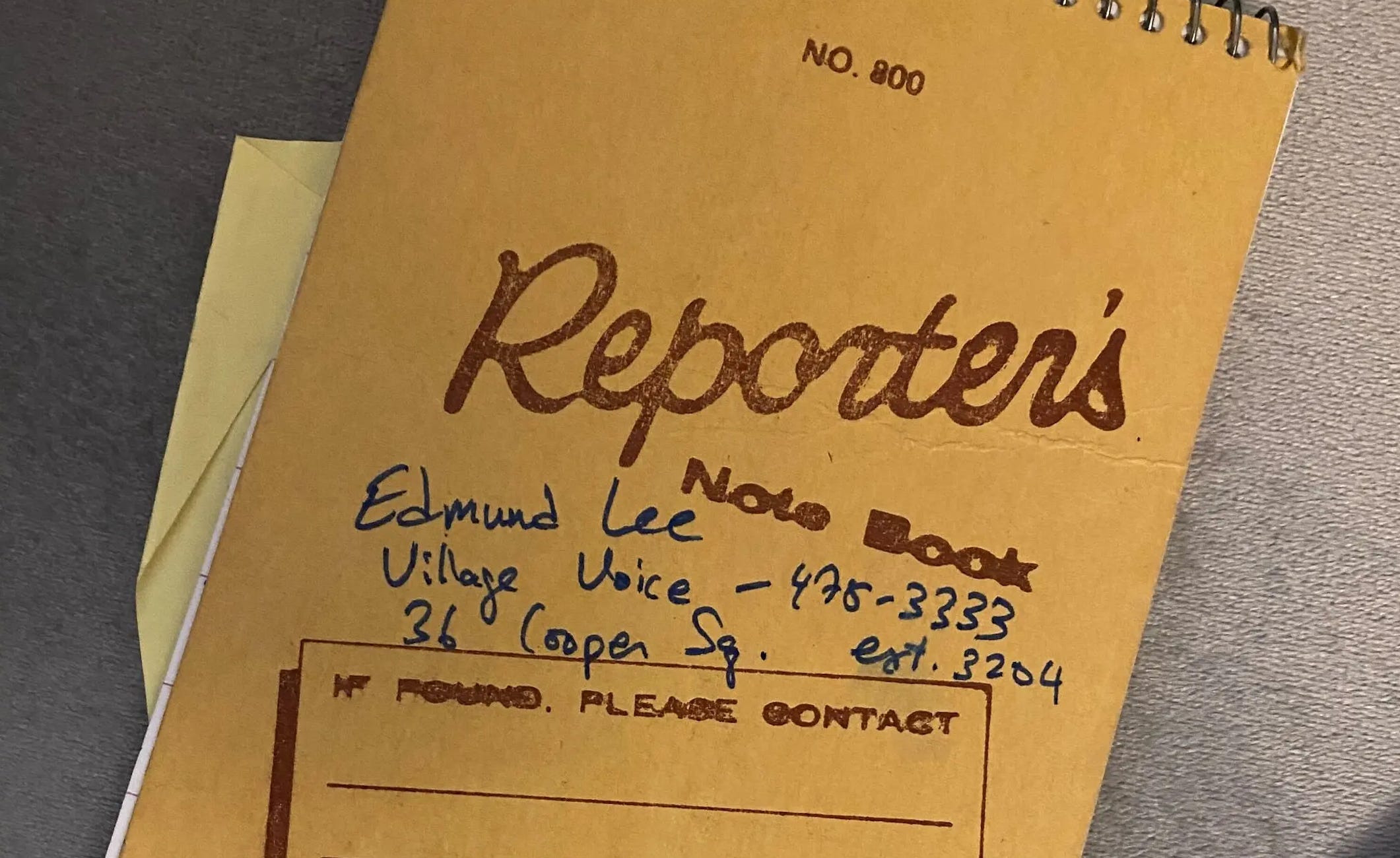
From this time and place
Trust is a tricky target, it’s entirely abstract, a switch in our lizard brains. People trust what they think they understand, and they understand story.
So it’s noteworthy how generations have synced up to the special trades. Cops, doctors, and lawyers — professions endlessly modeled in narrative defining TV’s most sacred oath: You will only produce process-driven serials about life and death. This year, HBO darling The Pitt took home the biggest trophy by teeing up the nanoscopic rhythms of emergency room life. Verisimilitude in disguise. Process porn. The audience loves, no, needs it.
I’m not saying public trust in these careers is exactly high, but reporters rank near dead last, just ahead of politicians.
Hollywood doesn’t help. When it takes on newsrooms, it reaches for cliché: men in fedoras (a notable exception), women bedding sources. The process is either flattened or invented. The real thing is messy, adversarial, iterative, the stuff that rarely makes it onscreen.
So readers do what people do: they tell themselves a story. Not a reported one, but a narrative. With motives, alliances, and a hidden logic. A cabal.
It’s no wonder Trump plays the presidency like a series, that his Defense Secretary reaches for movie language to describe war. It’s not just messaging. It’s how we process events.
I’m not saying it’s good or bad. It’s just there. Like a pair of sneakers thrown over a power line.
So about the headline. In another life, another place, I was, however briefly, a screenwriter, and I wrote a spec pilot about a fictional New York newsroom. The idea was to dramatize what, in 2007, felt like the beginning of the end. But not a slow-motion train wreck. I wanted to show what was being killed. The craft, the messiness, the deep nights, the bourbons, the caffeine, that often led to earth-shattering news. The independence we clung to.
But people trust story more than document, narrative more than announcement. In the absence of visible process, narrative wins. And right now, it’s winning.
I know I could be wrong, but in case I’m not, here’s that pilot, in Substack form.
The first post is the opening, the Teaser. Acts one through four will follow in successive weeks.
Nicely written Ed...I wrote something a few weeks back as well on the issue. https://nooneplannedthis.substack.com/p/why-trust-in-reporting-still-matters?utm_campaign=post-expanded-share&utm_medium=post%20viewer
Have been craving a Journalism show for a while… does feel like one way to help us out of the trust crisis. Thanks for sharing in this clever serialized way.